

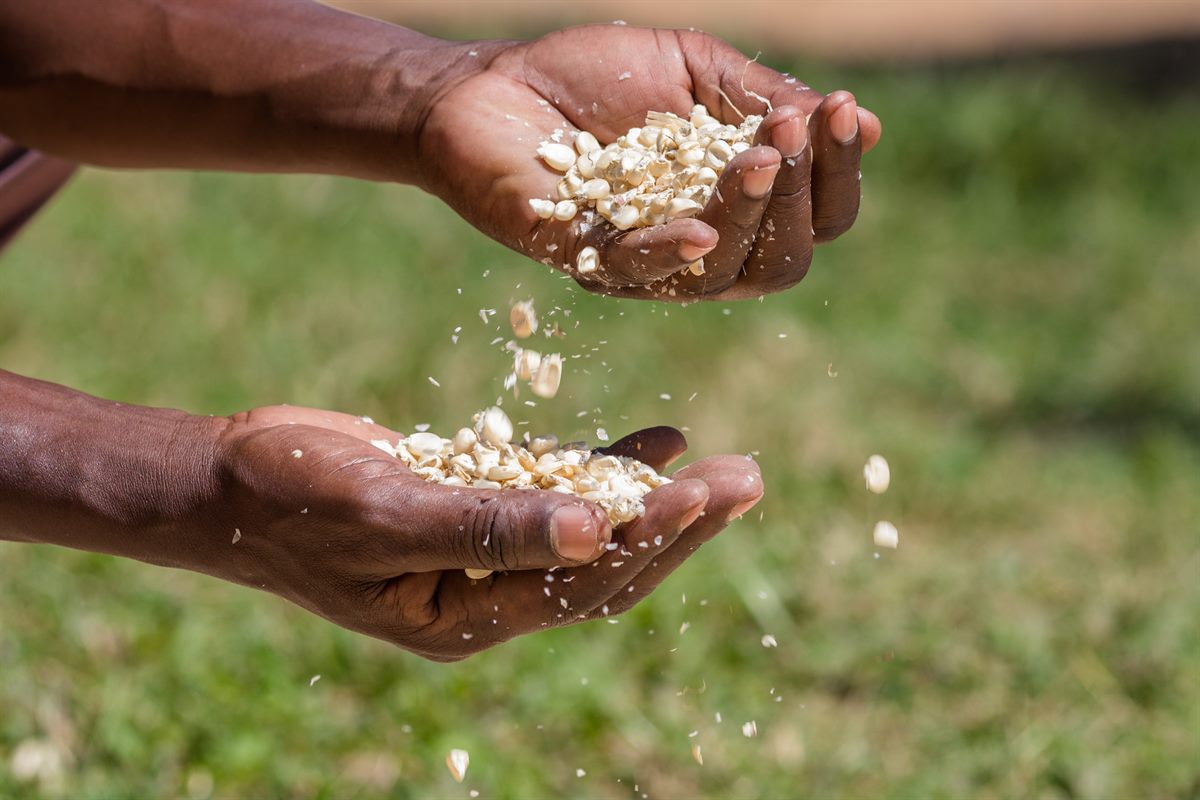
Cereals
Hybrid maize
Our deepest portfolio. Maturity classes from 95 to 155 days let you match the crop to the length and reliability of your rainfall season | the single most important decision a maize grower makes.
Overview
Bred for African seasons, not borrowed from elsewhere
Seed Co maize hybrids are selected in African trial networks for stalk strength, ear cover, disease tolerance and grain type preferred by local millers.
Choose a maturity class first, then grain type. In low or uncertain rainfall, an ultra-early or early hybrid that finishes before the season closes will nearly always out-yield a late hybrid that runs out of moisture. Where rainfall is reliable or irrigation is available, longer-season hybrids convert the extra growing days into significantly higher yield.
Variety range
Maize varieties at a glance
| Variety | Maturity (days) | Yield potential | Drought tolerance | Best suited to |
|---|---|---|---|---|
| SC 301 | 90-115 days | 11.7t tonnes per hectare | 5/5 | Suitable for short crop rotations or very late planting |
| SC 303 | <100 days | 10 t/ha at 53000 | 5/5 | Adaptable for multiple plantings per year in the lowvelds (with irrigation) and for very late plantings in the highvelds. |
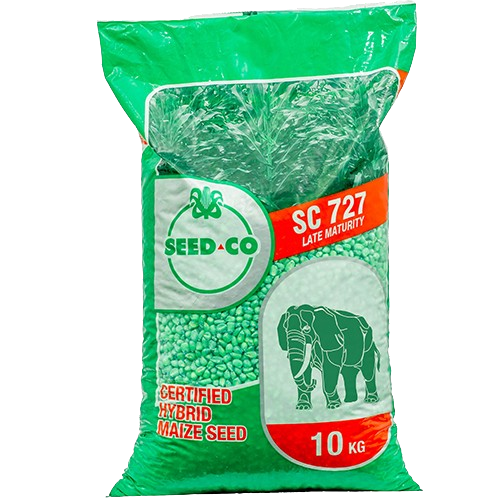
| SC 727 | 150–160 days | 14–18 t/ha | 3/5 | High-altitude commercial champion with stellar cob size and maximum grain filling. |
| SC Duma 43 | 115–125 days | 8–10 t/ha | 5/5 | Ultra-early hybrid that escapes late-season dry spells. Safest choice for a short or uncertain rainfall window. |
| SC Kanjeru 301 | 90–105 days | 6–8 t/ha | 5/5 | Ultra-early white maize ideal for emergency replanting and very short seasons. |
| SC Nduna (white) | 125–135 days | 9–11 t/ha | 4/5 | Flinty white grain preferred by millers, with good ear cover against weather damage. |
| SC Njiwa 621 | 145–155 days | 12–15 t/ha | 3/5 | Late-maturing, high-yield potential hybrid for reliable rainfall or supplementary irrigation. |
| SC Serena 513 | 130–140 days | 10–12 t/ha | 4/5 | Medium-maturing workhorse with strong stalk strength and good grey leaf spot tolerance. |
| SC Simba 627 | 140–150 days | 11–13 t/ha | 3/5 | Bred for the East African mid-altitude belt with strong maize streak virus tolerance. |
| SC402 Yellow | 115 to 125 days | 14 t/ha | 4/5 | Excellent standing ability. Can withstand plant population density of up to 53 000 plants per hectare |
| SC 301 – Kalulu | 80 days | 6 t/ha | 4/5 | Ultra early drought-tolerant maize hybrid for Malawi. |
| SC 303 – Hare | 90-110 days | 5-6 t/ha | 4/5 | Ultra early maize hybrid with very good drought performance and good standability. |
| SC 403 – Tumbili | 75–90 days | 20–25 bags/acre | 5/5 | Early-maturing variety that performs well in low-rainfall areas. |
| SC 403 – Monkey | 121-125 days | 6-8 t/ha | 4/5 | Very early maize hybrid with very good drought performance and good standability. |
| SC 419 – Kanyani | 90 days | 8 t/ha | 4/5 | Very early drought-tolerant maize hybrid for Malawi. |
| SC 419 – Tumbili | 75-90 days | 35–40+ bags/acre | 4/5 | Performs well in moderate rainfall; high yielding early maturity hybrid. |
| SC 419 – Zebra | 125-128 days | 9-11 t/ha | 4/5 | Very early maize hybrid with very good drought performance and very good standability. |
| SC 449 – Kanyani | 90 days | 8 t/ha | 4/5 | Very early drought-tolerant maize hybrid for Malawi. |
| SC 555 – Pundamilia | 120–125 days | 37–42 bags/acre | 5/5 | Performs well in low-to-moderate rainfall; drought tolerant and suitable for roasted maize. |
| SC 506 – Zebra | 127-130 days | 6-8 t/ha | 4/5 | Early maize hybrid with very good drought performance and good standability. |
| SC 555 – Mbidzi | 115 days | 10 t/ha | 4/5 | Early drought-tolerant maize hybrid for Malawi. |
| SC 657 – Simba | 134–141 days | 40–45 bags/acre | 4/5 | Medium-maturing variety suited to moderate-to-high rainfall. |
| SC 555 – Zebra | 127-130 days | 10-12 t/ha | 4/5 | Adapted maize hybrid with very good drought performance and very good standability. |
| SC 657 – Mkango | 128 days | 10 t/ha | 4/5 | Medium drought-tolerant maize hybrid for Malawi. |
| SC 719 – Tembo | 141–150 days | 50–55 bags/acre | 4/5 | Long-maturing, high-yielding variety that performs well in elevated areas. |
| SC 561 – Zebra | 124-131 days | 10-11 t/ha | 4/5 | Early maize hybrid with very good drought performance and very good standability. |
| SC 665 – Mkango | 128 days | 10 t/ha | 4/5 | Medium drought-tolerant maize hybrid for Malawi. |
| SC 637 – Lion | 130-136 days | 11-13 t/ha | 3/5 | Medium maize hybrid with moderate drought performance and very good standability. |
| SC 719 – Njobvu | 155 days | 12 t/ha | 4/5 | Late drought-tolerant maize hybrid for Malawi. |
| SC 647 – Lion | 128-135 days | 11-12 t/ha | 4/5 | Medium maize hybrid with very good drought performance and very good standability. |
| SC 657 – Lion | 130-136 days | 12-13 t/ha | 3/5 | Medium maize hybrid with moderate drought performance and very good standability. |
| SC 608 – Lion | 130-136 days | 12-13 t/ha | 3/5 | Medium maize hybrid with moderate drought performance and moderate standability. |
| SC 719 – Elephant | 142-148 days | 12-14 t/ha | 4/5 | Late maize hybrid with good drought performance and very good standability. |
| SC 727 – Elephant | 145-150 days | 12-14 t/ha | 3/5 | Late maize hybrid with moderate drought performance and very good standability. |
Agronomy