The project was introduced in the ward by WSSC and DWSSC members. I then called for a village assembly to sensitise villagers about the project interventions. The community embraced the project, and the selection of Sanitation Action Groups (SAGs) was carried out by community members.
I submitted the names of the selected SAG members to Mr. Moyo, the Environmental Health Technician (EHT) for Ward 8. In the village, SAG members are championing efforts to achieve an open defecation-free (ODF) community.
As the village head, I use village assemblies to encourage households to engage trained builders to construct toilets. I also enforce the regulation that newly established households should construct a toilet before building their houses, working closely with the SAGs to ensure compliance.
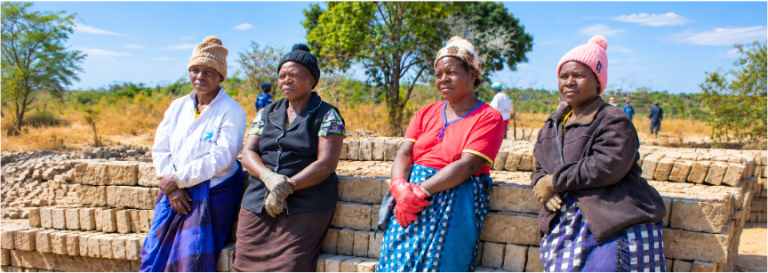
As we work towards achieving ODF status in Kaseke village, we are encouraging households to use the summer season to mould bricks in preparation for toilet construction.
2. What changes do you expect to take place in your community following the introduction of the systems strengthening approach in the WASH programme? Why is this important?
I look forward to Kaseke becoming the first village in Ward 8 to be certified open defecation-free. Together with the SAG members, we aim to achieve this goal and invite neighbouring villages to participate in the scheduled ODF celebrations.
Reducing open defecation is essential for improving sanitation and protecting the health of our community. This is why I am working tirelessly with the SAG members to encourage households to construct and use toilets. Achieving ODF status will be an important milestone for Kaseke and a source of motivation for neighbouring communities.
3. What changes do you expect to take place in the work or services you offer since the introduction of the systems strengthening approach in the WASH programme within your community? Why is this important?
I expect SAG members to become leaders in promoting behaviour change within the community. I also anticipate stronger collaboration between skilled builders, SAG members and the community at large.
As the village head, I will ensure that households make use of the trained builders and that toilet construction costs remain affordable. I have already introduced the builders to the community, and I expect them to carry out their work with the full support of SAG members, who are responsible for monitoring progress from the toilet-siting stage onwards.
This collaboration will help accelerate the process of achieving ODF certification in the ward. By working together and keeping construction costs affordable, we can encourage more households to build toilets and improve sanitation throughout the community.
4. From your point of view, describe a story that best illustrates the most significant change you have experienced as a result of taking part in the WASH systems strengthening project in your community.
I have witnessed remarkable improvements in the village following the demand-led sanitation exercise conducted in recent months. I am pleased to report that 25 households have successfully completed the construction of standard toilets, all built by trained builders. These builders accept both cash and in-kind payments, making toilet construction more accessible to households.
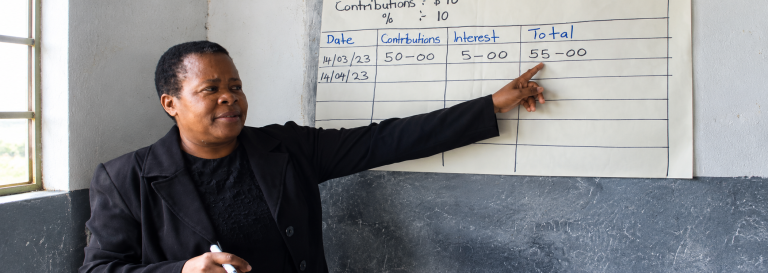
Kaseke has a total of 135 households, and I am hopeful that the village will achieve ODF status in the shortest possible time. To encourage more households to construct toilets, SAG members conduct monthly home visits to monitor progress. They also encourage households to establish Internal Savings and Lending (ISAL) groups to help finance toilet construction.
The SAG members are actively involved in monitoring toilet construction, from the initial siting stage through to roofing. Their commitment has made them an important force in improving sanitation within the community.
However, the group needs additional capacity building in documentation, particularly in preparing monthly progress reports and maintaining WASH inventories.
One of the most encouraging developments is that many households are now burning bricks in preparation for toilet construction. This demonstrates growing community participation and ownership of the project. I am happy to see these positive changes and believe that, with continued collaboration, Kaseke will achieve its goal of becoming an open defecation-free village.
5. Do you have any other comments regarding this programme?
-
The project has come at the right time, and communities are actively working towards achieving open defecation-free status as soon as possible.
-
There is a need to build the capacity of SAG members in documentation, particularly in preparing monthly progress reports and maintaining WASH inventories.