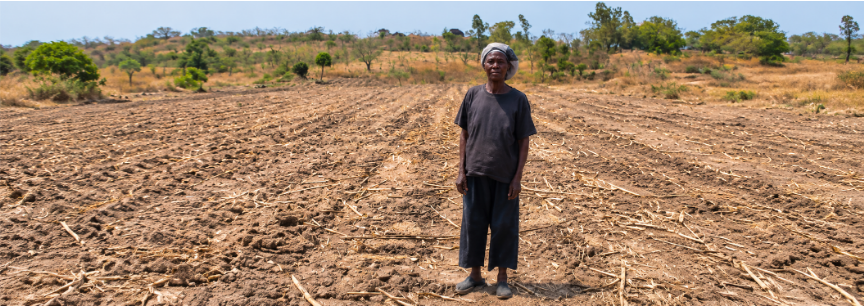
Hurungwe is one of the districts in Mashonaland West Province that is being rapidly affected by climate change. Although it falls within Natural Region II, which receives relatively high rainfall, the district is increasingly experiencing frequent and prolonged mid-season droughts. Erratic and uneven rainfall distribution has also become evident, particularly in the project wards that share boundaries with Natural Region III. Temperatures are usually high and can reach 39 to 40 degrees Celsius.
The district is among four districts in Zimbabwe supported by the Climate Resilient Agriculture (Match Fund 3) Project, funded by the Catholic Agency for Overseas Development (CAFOD) through the Farm Community Trust of Zimbabwe (FCTZ). The project implements various interventions to help communities build resilience to the effects of climate change.One of the interventions explored under the project is the Farmer Field School (FFS) concept. This approach provides a platform for farmers and agricultural extension officers to share information and promote the use of climate-smart technologies to reduce the effects of climate change.
Conservation agriculture is widely used in crop production, particularly for food crops, to strengthen food security. The FFS approach was piloted in Wards 10, 11, 12 and 16 of Hurungwe, where 53 schools were established during the initial stage. These schools tested various technologies, including different crop varieties, small-grain trials, intercropping, crop staggering, mulching, and the use of large, deep basins and furrows.Among the technologies tested, mulching and the selection of drought-tolerant crops and varieties proved particularly effective in helping crops survive the prolonged dry spells during the 2015/2016 season. The best-performing Farmer Field School across the four wards, showcased during the district field day, achieved a yield of 74 kg from a 10 m × 10 m plot, equivalent to 7.4 tonnes per hectare.
This result impressed many farmers who attended the field day and encouraged the adoption of these technologies. Their effectiveness was further demonstrated when Agritex began promoting the technologies in other wards that were not initially covered by the project. The benefits also extended beyond the schools, reaching five of the six member farmers, who had already begun preparing their land and collecting mulching materials.
One farmer, Freedom Katandika, shared the benefits he gained from participating in the Farmer Field School and adopting conservation agriculture practices. During a visit by an FCTZ officer, he reported harvesting 63 bags of 50 kg maize, equivalent to approximately 3.15 tonnes in total, from his 0.6-hectare plot during the 2015/2016 season. He attributed this result to his maize crop surviving the dry conditions without wilting.Another farmer, Johannes Ngoshi, also praised the benefits of participating in the Farmer Field School. He highlighted the knowledge he had gained about climate change and the technologies available to reduce its effects. By the time he was interviewed, he had already started digging planting basins and collecting mulching materials in preparation for the next cropping season.