Discover the stories, experiences and contributions of members of the Old Owl community.

Hi Guys!
My name is Kudzai Masamvu
CO-DIRECTOR , COO & FLIGHT INSTRUCTOR of RFC-Air school-ATO. An aviation/flying school in Rustenburg, North West province in RSA.
I’m an old Watershed College student from 2003-2005 (forms 1-3).
My interest in aviation started at a very young age. My dad used to travel a lot when he worked for the Parliament of Zimbabwe. We would go to the airport to drop him off and I would see these pilots dressed in their uniform and I would admire them from afar, until one day when one of my dad’s friends who happened to be a pilot for Air Zimbabwe at the time, invited me into the cockpit of one of their planes.
I was fascinated with all the buttons and switches and how these pilots would operate such a huge machine and fly it high up in the sky.
I moved to South Africa in 2005 and finished my high school here.
I enrolled at a local flying school at the age of 17 and began my journey. I would fly during holidays and by the time I had finished my Matric, I had already obtained my PPL (Private Pilot’s License).
I then went on to do my CPL (Commercial Pilot License) and also managed to get my instructors rating with ATPL.
The journey was tough and very tiring but through God’s grace I persevered and here I am today. There is still a lot that I still need to accomplish in my aviation career, but I’m here to tell you that anything is possible! If I can do it so can you!!!! Reach for the skies and the sky is actually not the limit!
I hope to hear and see more Watershed scholars becoming pilots or excelling in other careers at an international level.
Watershed has also produced other pilots who are also doing well in their various parts of the world, namely: Anesu Musakwa and Enos Mutyavaviri to mention a few. Coincidentally we were all in Chinyika boys.
May God continue to bless Watershed College and its students.
ZIZI MOTO!!!!
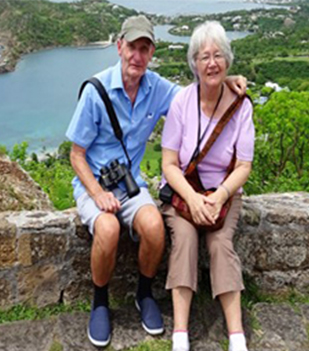
Carole and Jim Campbell were teachers at Watershed College from August 1993 to April 1998. Their children both attended Digglefold School and Kirsty moved up to Watershed in 1996.
1. What was the first thing that impressed you about Watershed, what stuck out for you? (The environment, the students, the community).
The space for our kids to roam; the farm, the sports facilities – what family with young children wouldn’t want to live on a campus with a pool, squash courts, basketball courts, rugby, hockey and cricket pitches on our doorstep?
Students standing up to show respect to adults (although it could get a bit wearing if I forgot something and had to go back to the house).
The first thing I remember about our arrival was it was cold and rainy (not what we had told the kids to expect!) – and the house hadn’t been lived in for a while so was cold; within minutes of our arrival Jane had lit a fire and a steady procession of staff came bearing gifts- tea, milk, a plant, blankets! That welcome made all the difference and the next few days made all the difference. The Davidsons invited us to dinner and the next morning the sun was shining (as it should); the school bakkie took us into Marondera…… we had come to the right place.
So first impressions – lovely surroundings, welcoming people and a school where we felt we could make a difference.
2. What subjects did you teach?
I taught Science and Biology to A level. Jim taught Mathematics.
3. Please tell us what your roles and responsibilities were?
We were in charge of Junior Hostel for 3 years.
I was Head of Science shared with Mike Quain for the 1st term of 1994, then sole responsibility.
Jim coached rugby and cricket to begin with then concentrated on coaching tennis; I coached U14 & U15 swimming.
All the staff were asked to run a club: Jim did Chess, I did a Games Club then a Video Club showing BBC documentaries when our stuff arrived from the UK.
When the school got computers, I ran the computer suite in the afternoons for students to do project work and learn word processing.
So we had a full teaching load, plus Junior Hostel, plus clubs, plus sport at least 2 afternoons a week and weekends. We worked from 6am till 10pm and weekends, took students on field courses and leadership courses and loved every minute of it.
4. What was the experience like for your children having to live and learn at Watershed? (How was the education system and how would you say that foundation benefitted them later on in life)
The education system was much the same except the school year starts in September in UK so when both kids repeated a term of grade 2 and 5 and lost almost 2 terms when we returned to UK. Both children did well though – a testament to the work ethos they learned in Zimbabwe.
The curriculum and exam system was much the same as UK as Zimbabwe was doing Cambridge. What perhaps was missing was the breadth of information from magazines, videos and CD ROMs. My Mum sent BBC schools programmes and BBC documentaries on video. The Science for Schools programmes became part of our teaching across the whole department. The documentaries were shown across the hostels for general knowledge.
Being staff children had its pluses and minuses but the opportunities from living at Watershed were immense. They were included in many Watershed activities both as students and staff children. We could only take students on courses in the holidays if our children came with us. It wasn’t easy to fit in their needs with the demands of Watershed though, so we only ran the hostel for the first 3 years.
5. Fondest memory at Watershed?
Too many to pick out just one
Gosho, Masangu, Rifa & Sanganayi Creek stand out as extra special times with students watching them learn to work as a team and get on with everybody;
Travelling on a bus across Zimbabwe for Interschool sport;
Lunches in the pub with visiting teams;
Settling new boarders into Junior Hostel;
Staff lunches, leaving dos, Christmas picnics at the pool – Watershed without students was wonderful but we were always pleased to see them back;
Stress free teaching with students who respect adults and want to learn…. that is why we returned to teach in African schools again and again and still would if we could.
6. From your point of view, what would you not want to see changed about Watershed?
The school was set up by local farmers to provide a non-selective co-ed school where bullying was not allowed, where all ages and abilities were respected and juniors were looked after by seniors, as if they were family. Watershed didn’t have the pretensions of grandeur that some schools had but the children were happy and happy children learn better….
7. Your message to Watershed Staff, parents and students.
Watershed had a lot to offer 20+ years ago and looking at the website now, the school has expanded tremendously especially their music and cultural activities. We think back very fondly of Watershed and welcome news of people who might remember us. I haven’t put names to people as the truth is I don’t remember ALL the names. If anybody wants to add names, please feel free!
Watershed was the best job I ever had. Some have been as good in other ways but this was the only one where we were so involved in everything. It was exhausting but in a very good way.
We have been back in UK for 20+ years now and have been happily retired down in rural Devon since 2007. We are working our way down my bucket list of places I haven’t seen because we were teaching in Africa – started with Egypt and still going…
We still need our bush fix though and go to South Africa as often as we can to get our bush fix – where we would be now if we could!
We hope you enjoy the photos. (http://www.watershed.ac.zw/media/video-gallery/watershed-1993-1998-campbell-family) 20+ years is long enough for us all to look back fondly on that young person we once were.
Yours Carole & Jim Campbell

Natalie Nyamutumbu started Form 1 at Watershed in 2003, and finished Upper 6 in 2008.
She then went to Rhodes University to study Economics. Natalie now lives and works in South Africa as a Senior Certified SAP Consultant (Information Systems).
Natalie benefitted from the Academic support programme (ASP), when she was in Form 2, to manage dyslexia. This equipped her with tools useful throughout her high school at Watershed, and that she continues to use today.
Natalie donated the ASP trophy that is awarded to the most improved ASP student yearly. In Natalie’s own words, “This was to help encourage other students at Watershed like myself. Being in the ASP class doesn’t judge your intelligence, but instead one can get tools from that class that can help with academic challenges.”
A lot of students besides Natalie Nyamutumbu, have gone through and continue to benefit from the Academic Support Programme, realising their full potential and going on to excel in life.
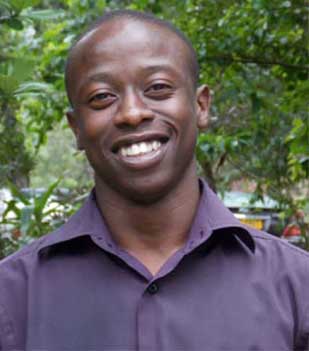
Tapiwanashe joined Watershed College as a Lower 6 student in September 2010 from Goldridge College. He was a day scholar till he finished his studies. Upon finishing his ‘A’ Levels, he went to Africa University where he graduated in June 2016 with a Bachelor in Business Studies (Management) degree. He is currently studying for a Masters degree in Applied Entrepreneurship with Chinhoyi University of Technology. Apart from his studies, he is also the co-founder of Humbic Advisory which is a management and tax consultancy. Since he left the College, he is also occasionally present by the sports fields assisting the rugby and cricket coaches during some afternoon sporting sessions.

Musemo Handahu writes a lifestyle blog, Lion Hunter, about her journey in life and love for fashion.
Her surname means “lion hunter” so it’s no surprise that Musemo Handahu is an unstoppable force. She has garnered attention with her bold, non-conformist thinking as a fashion stylist, writer and advocate for increasing the visibility of women of colour in the Canadian fashion industry.
She was born and raised in Zimbabwe and moved to Canada 17 years ago to study at Acadia University. After graduation and in between jobs she started a lifestyle blog called Lion Hunter, which documented her journey and new life in Halifax and her love of fashion.
Her authentic, outspoken, unapologetic and often humorous style on the blog she created with her brother Tendai Handahu, quickly gathered a loyal following and caught the attention of international publications as well as corporate sponsors.
She has been a style correspondent for more than 10 seasons of Toronto Fashion Week and recently covered fashion weeks in Johannesburg and Cape Town, South Africa, for Essence Magazine. Her style has received numerous features in People Magazine, Flare, Marie Claire, Redbook Magazine and The Huffington Post. Earlier this year she made the 10 Best Dressed in Canada list in the Globe and Mail newspaper and was part of the jury panel for Atlantic Fashion Week 2017.
When not sharing her eclectic sense of style, she creates content for brands ranging from Samsung to Sunwing and Tim Hortons to Winners, and is currently the stylist for CTV’s upcoming #makeovermonday.
She has opted to remain in Halifax rather than move to the more obvious fashion hubs of Toronto or Montreal. By choosing to stay she has become a part of the city’s new creative economy and a strong voice for local fashion and women’s empowerment.
Q: What’s the most original and non-conformist idea you’ve had?
HANDAHU: The decision to just “be.” Despite the many descriptors that one could use to discriminate against me, I am here, I will be a force to be reckoned with and that’s final.
Q: What is the most innovative and original idea or thought you’ve seen happening in Nova Scotia?
HANDAHU: I remember always getting a sense that people felt that one needed to leave Halifax for a bigger city to have cool experiences. I believe that mentality has shifted, as there’s been a collective realization that’s been happening in Halifax for a few years now. It’s the idea that regardless of how small our city is, we are, very much so, deserving of goodness. When I experience something cool now I don’t think, “wow, I felt like I was in Toronto.” Instead, I see it as our own. I love how I’m seeing this ideology in my social and professional circles.
Q: What’s the biggest risk you’ve taken?
HANDAHU: Putting my life online is definitely the biggest risk I’ve taken. It opens up my thoughts, background, views, body and life to be openly criticized and it’s scary never knowing how people will receive it all.
Q: What do you think it takes to stand out these days?
HANDAHU: Sincerely knowing and sharing who you really are will always be high on the list of things that make one stand out.
Q: How do you bring your ideas to life?
HANDAHU: I trust my gut instinct. If the thought of that idea feels good I’ll do whatever I can to bring it to life. I’m also super lucky to have a great circle of people that I can also bounce ideas on and are always happy to help me make them possible.
Q: What’s one trend that excites you?
HANDAHU: I’m currently excited about the travel renaissance that is happening in the black community. We are travelling the world, experiencing different cultures and sharing our own.
Q: What is a habit of yours that makes you productive?
HANDAHU: Currently — and I never thought I’d say this — the gym is helping me to stay focused. On top of that I try not to dwell too long on an idea; I just jump and remain as open-minded and accepting as I can to both success and failure.
Q: What advice would you give your younger self?
HANDAHU: You’re on the right path kid. Keep being a badass!
Q: What’s the best advice you’ve received that you actually followed?
HANDAHU: That it’s sometimes OK to let go of one of my projects or ideas despite it not being perfect! Sometimes I end up wasting a lot of time because I may have such a high and unattainable standard of what perfect is. By letting go I’ve learned that the people that support me love that they are a part of my story of growth, and they’ve stuck with me throughout my seven-year blogging journey.
Q: What is one strategy that has helped you grow your business?
HANDAHU: I don’t know if I’d call it a strategy but more a decision to strive to be as authentic as possible, to never alter the core of my brand or who I am to fit a campaign or opportunity that comes my way.
Q: What is one piece of software, app or gadget that you use that is essential?
HANDAHU: Instagram, because I can engage on a daily basis, and my Samsung Galaxy S8 because it keeps me connected to everything digital.
Q: What is the one book that you recommend our readers should read and why?
HANDAHU: We Need New Names by NoViolet Bulawayo because she’s a Zimbabwean author, she is brilliant and the book’s viewpoint of displacement and finding refuge in a new country resonated with me.
Q: What is your favourite quote?
HANDAHU: “My alone feels so good, I’ll only have you if you’re sweeter than my solitude” — Warsan Shire
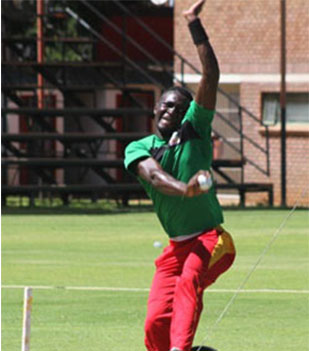
A Zimbabwean cricketer who has represented the Mountaineers in Zimbabwean domestic cricket. He is an all-rounder who bowls right-arm fast-medium and bats right-handed.
Mashinge was born in Marondera, in Zimbabwe’s Mashonaland East Province.He made his first-class debut in January 2016, aged 19, playing for the Mountaineers against the Mid West Rhinos in the Logan Cup. Later in the year, Mashinge was selected in the Zimbabwe under-19s squad for the 2016 Under-19 World Cup in Bangladesh. He played in all six of his team’s matches, scoring 127 runs (the third-most for Zimbabwe) but taking just two wickets. In the ninth-place play-off against Afghanistan, he top-scored for Zimbabwe with 66 runs from 92 balls.
He made his Twenty20 debut for Zimbabwe against Free State in the 2016 Africa T20 Cup on 9 September 2016. In February 2017, he was named in an academy squad by Zimbabwe Cricket to tour England later that year.

I started at watershed college in January 2005. I left watershed in November 2006. I was in Form 2. For those that have been here since form 1 and are now in final year, you might be asking yourself, “what experience does he have of shed?” or “what do you know about being a zizi?” Since I was only there for 2 years.
Well, let me enlighten you as to my “Shed” experience –
I was placed, in the best hostel in the school, GOMBORA boys. Yes, I am a shark! In Gombora we had them all, we had, thieves, crooks, pastors, lawyers, fighters, dancers, affluent children, not so affluent children – the list goes on! You name a character trait, we had them all, I can safely name names and point fingers, now that we have all graduated.
I was a quiet one when it suited me! I was hardly ever in any trouble. I was not much of a sports star. I played cricket in the season, I skipped rugby at every opportunity and hockey was out of the question as I was left handed I ruled myself out. I was bigger then as well, which did not really help. I loved cricket though, but it was music that stole my heart!
The year before I started at Watershed College, the music department had put on a show at Digglefold (my primary school at the time), and the Marimba band stole my heart. In fact the whole department and its talent stole me and I knew 2 things:
So from the onset I joined the music department, and started off in the school choir! This was one of the best decisions I made with my 12 year old self at the time, and still considered as part of my top 10 best decisions of all time.
I automatically felt a sense of belonging. A sense of family. I realised from that experience that no man is an Island. We all need each other. There is absolutely no one of note in this entire world who made it to where they are without a helping hand from someone somewhere. I was in the choir, I was tenor. I could not sing soprano. I cannot sing a four part harmony by myself. Likewise with cricket, football and rugby. No one person can play all the positions by themselves. You cannot be the bowler and the wicket keeper at the same time. You cannot be a striker and a keeper at the same time. You cannot be a hooker, full back, and a prop all at the same time. You need others to help you achieve your goals and your dreams. Solo sports like tennis, still require a whole coaching staff behind the star in order for him/her to reach their maximum potential. This is what being in a choir, and later on, the marimba band taught me.
With collaboration and team work comes trust. You have to trust your team mates to play their position and to play it well. I was not a bass. I played the tenor marimba, I had to trust that the rest of the choir or band, respectively, were putting in as much time in practice as I was. I had to trust they played their part well. And they had to trust that I would do the same. They had to trust that I was knew what I was doing, that I was putting in the time and that they could depend on me. Again, each person has a position to play.
With that trust come with hard work. Everyone trusted that I was putting in the same hard work they were. And I trusted that they were putting the extra time required for the band and choir to succeed as a whole. And hard work always comes with sacrifice. Honours at the Allied Arts Competitions do not come without hard work and sacrifice. Do not contend yourself and cheat your potential by doing just the bare minimum, just enough to get by.
Remember:
This culture of team work, trust, hard work and sacrifice is cultivated here at this school. I was here and this has stayed with me thus far. It is through these principles that I have managed to attain a Masters in Electrical and Electronic Engineering.
I have spoken mostly about what music gave to me. So let me tell you what the rest of the school gave to me.
I remember one Sunday whereby I served five punishments all in one day, for various reasons. Suffice it to say it had been an eventful week. However, this is what I learnt from those experiences:
Before I finished University, I had a job lined up. I was going to work for Transport for London (literally the backbone and nerve system of London). I work for their rail and underground/subway division. I am an Asset Manager. My job is to ensure that all our station have adequate electrical power, and to find new technology which allows for the control of power into the station according to the station demand in order to avoid overloading and shut downs. There are over 512 stations on the underground, I am responsible for approximately 100 of these. We cater to over 10million passengers every week, and for every day of the week, we cannot have shut downs, or power losses. I therefore have to ensure that the correct maintenance is done on the system in order to keep it at optimum performance. I have to understand the power demands of new assets added to the station power bank, and take the correct action in order to ensure that the station has enough power capacity to handle the new installations. It is a lot of responsibility and I have to ensure that my decisions are well researched.
That is my job!
Outside of this I am a Youth Leader at my church. I have various other projects I am undertaking including web development and property development (these are in their baby stages) However, the one that gives me the most joy is my Youth Team at church
So what does this have to do with you?
I imagine you are expecting me to tell you that you can be all you want to be , just like me. Well its true, you can, but that’s not what I am here to tell you.
I love my job. I am good at what I do. I love the people I work with

Tarisai is a Zimbabwean international and first-class cricketer.He was part of Zimbabwe’s squad for the 2014 ICC Under-19 Cricket World Cup. He made his List A debut in 2014 and made his first-class debut in the same year. To date, his highest score in List A is 82 against Tuskers on the 11 November 2015 at Kwekwe.
In October 2016 he was included in Zimbabwe’s Test squad for their series against Sri Lanka.The following month he was included in Zimbabwe’s One Day International (ODI) squad for the tri-series against Sri Lanka and the West Indies. He made his ODI debut in the final of the tri-series against Sri Lanka.
In February 2017, he was named in an academy squad by Zimbabwe Cricket to tour England later that year.He made his Test debut for Zimbabwe against Sri Lanka in their one-off Test in Colombo on 14 July 2017.
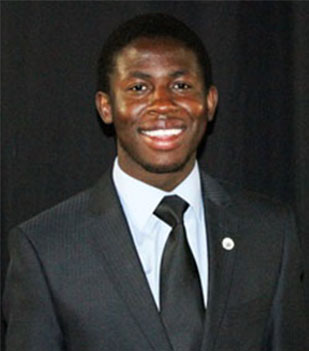
Philip Muguhu graduated from Wiley College with a Bachelor of Science degree in Mathematics. He went on to earn a Master’s degree in Finance from Texas A&M University. Philip is currently manager for reporting and analytics at Walmart’s Headquarters in Bentonville, Arkansas, USA.
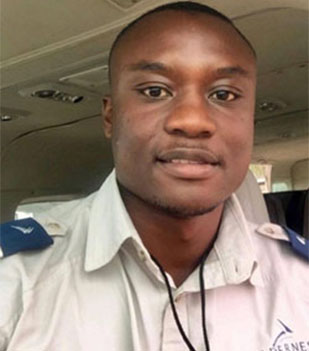
A pilot at Wilderness Air Zimbabwe. I was born and raised in Harare, Zimbabwe, and I completed my High School at Watershed College – Marondera in 2009.
I acquired my commercial pilot license at Cape Flying Services in the Western Cape, South Africa in May 2011. I started working for Wilderness Air Zimbabwe in April 2014 where I currently fly the Cessna C206 and Grand Caravan C208.
My passion for flying is inspired by my father who dreamed of becoming a pilot, but could not achieve this due to financial constraints. I am driven by my hard working parents and loving siblings who have been supportive in my flying career since the day I started flying. I enjoy working at Wilderness Air Zimbabwe because each day brings its own lessons and challenges that I do my best to prepare for.
Not only have I acquired better flying proficiency, but my interpersonal skills have improved remarkably over the years. Being part of the Wilderness team has undeniably benefited my career and personal life!
During my free time I enjoy watching various sports and going to the gym. I have developed an interest in wildlife photography which was made possible by flying into the beautiful world class Wilderness Safari Camps that I spend majority of my time in.
I wish to contribute in developing the wilderness Air Zimbabwe brand through great work ethic and corporate governance in a consistent manner.
Do what you are passionate about and you will never fail!”